FAQ About Swapbody Containers
1. What is a swapbody container and how does it differ from a standard ISO container?
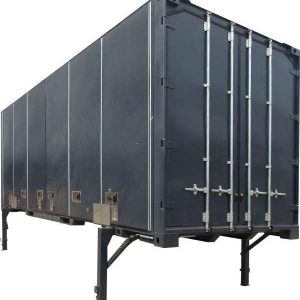
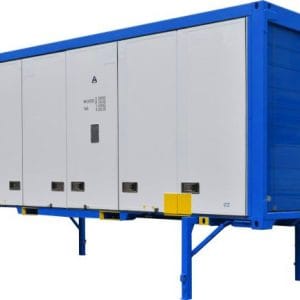
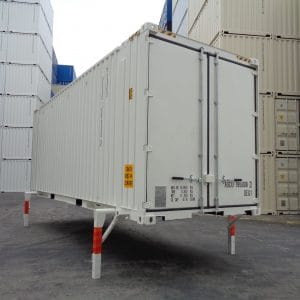
A swapbody container (also known as a “swap body”) is a detachable, modular freight unit designed for efficient multimodal transport between road and rail. Unlike standard ISO containers, swapbodies are typically lighter, wider (2.55m), and optimized for European pallet sizes (80×120 cm). They feature foldable legs, quick-release mechanisms, and non-rigid structures that allow faster exchange between trucks and railway wagons — reducing loading time to just 5 minutes.
2. Why choose a swapbody container over traditional shipping containers?
The swapbody container offers several advantages:
• Higher payload capacity: Due to its lighter structure, it can carry up to 12.3 tonnes compared to an 8.8-tonne ISO container of the same size.
• Improved logistics efficiency: Enables seamless switching between truck and rail without rehandling cargo.
• Lower fuel consumption: Reduced weight leads to better fuel economy and lower carbon emissions.
• Flexible loading options: Supports both vertical (crane) and horizontal (sliding) loading methods.
This makes it ideal for intermodal transport in Europe and emerging markets.
3. Can swapbody containers be used for refrigerated goods?
Yes. The Reefer Swapbody Container is specifically designed to transport temperature-sensitive cargo such as fresh food, pharmaceuticals, and perishables. It features:
• Integrated refrigeration units
• Insulated walls with PU foam (50–100mm thickness)
• Sealed doors and ventilation systems
• Temperature control range from -20°C to +20°C
These containers maintain stable internal conditions during transit and are widely used in food logistics and cold chain distribution.
4. What materials are used in the construction of your swapbody containers?
Our swapbody container is built using high-strength, lightweight materials to ensure durability and efficiency:
• Chassis: High-grade steel (S355J2+N) or aluminum alloy (reducing weight by 20–30%)
• Side walls: Corrugated steel, aluminum sheets, or composite panels
• Roof: Rigid panel with waterproof seals or tarpaulin for open-top models
• Flooring: Marine-grade plywood (25–30mm) or aluminum composite with anti-slip coating
All components are engineered for strength, corrosion resistance, and ease of maintenance.
5. How do you ensure the safety and stability of swapbody containers during transportation?
Each swapbody container is equipped with:
• Standardized connection devices like twist locks and quick-release latches for secure attachment
• Robust chassis and shock-absorbing suspension system to handle rough roads and rail transitions
• Foldable support legs that provide stable ground support during loading/unloading
• Integrated lifting points compatible with crane spreaders
We also conduct rigorous testing, including drop tests and load-bearing evaluations, to ensure compliance with European intermodal standards.
6. Are swapbody containers stackable?
While some swapbody containers can be stacked, they are generally not designed for multi-layer stacking like ISO containers due to their non-rigid structure. However, certain models (especially those with reinforced frames) can be stacked two-high under controlled conditions. For most applications, they are transported individually on trucks or railway wagons.
7. What are the common dimensions of a swapbody container?
Standard swapbody container dimensions include:
• Width: 2.55m (standard), 2.60m (refrigerated version)
• Length: 7.15m, 7.45m, 7.82m, or 13.6m
• Height: Varies based on model (typically 2.8–3.0m)
These dimensions are optimized for compatibility with European road vehicles and rail platforms, allowing efficient use of space and minimizing overhang.
8. Can swapbody containers be customized for special applications?
Yes. As a leading swapbody factory, we offer full customization services for various needs:
• Special Swapbody Container: Designed for bulk materials, machinery, or oversized cargo
• Curtain-sided models: With sliding tarps for easy lateral loading
• Open-top versions: For tall or irregularly shaped goods
• Tank swapbodies: For liquid chemicals, edible oils, or fuels
We work closely with clients to design solutions tailored to specific operational requirements.
9. Where are swapbody containers commonly used?
Swapbody containers are widely used in:
• Europe: Especially in Germany, Netherlands, Switzerland, and France
• Intermodal transport networks: Connecting road and rail for long-distance freight
• Remote markets: Reaching areas inaccessible by direct rail but reachable by road
• Industrial logistics: Mining, agriculture, construction, and energy sectors
They are particularly effective in regions where rapid cargo turnover and flexible routing are essential.
10. Why choose Beiyu as your swapbody container manufacturer?
Beiyu is a trusted swapbody factory specializing in high-quality, durable, and innovative swapbody container solutions. Our advantages include:
• Full compliance with European intermodal standards
• Use of advanced materials (aluminum, composite panels) for lightweight performance
• Custom engineering and integration capabilities
• End-to-end support from design to delivery
As a professional swapbody container manufacturer, we deliver reliable, cost-effective, and efficient transport solutions for global logistics operators.