FAQ About Offshore Containers
1. What is an offshore container and what makes it different from standard shipping containers?
An offshore container is a specialized transport unit designed to withstand extreme marine environments, including high salt, humidity, wind, and wave impact. Unlike standard shipping containers, offshore containers are built with enhanced structural strength, corrosion resistance, and safety features to meet the demanding requirements of oil & gas, offshore construction, and maritime logistics operations.
2. Why choose a hot-dip galvanized offshore container?
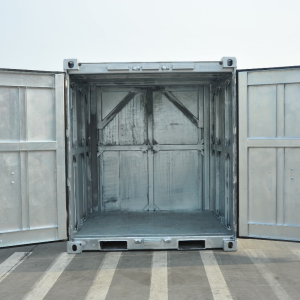
A hot-dip galvanized offshore container undergoes a protective coating process where steel components are immersed in molten zinc, forming a durable, metallurgically bonded layer that provides long-term anti-corrosion protection. This treatment significantly extends service life in harsh offshore conditions, prevents rusting, and eliminates the need for frequent maintenance or repainting — making it ideal for long-term deployment in marine environments.
3. What are the key features of your offshore dry container?
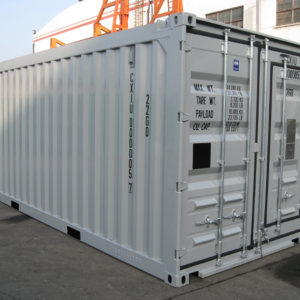
Our offshore dry container is engineered for reliability and durability in offshore operations. Key features include:
• Waterproof and dustproof design with weather-resistant seals
• Heavy-duty locking mechanisms and reinforced doors for security
• Customizable interior options, such as shelving, lighting, and ventilation systems
• Designed to comply with DNV 2.7-1, ISO 1496-1, and CSC standards
• It is suitable for transporting equipment, tools, and supplies between offshore platforms, vessels, and onshore facilities.
4. How does your offshore reefer container maintain stable temperature during transit?
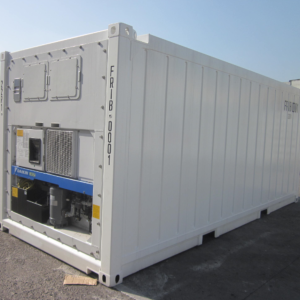
The offshore reefer container is equipped with a high-performance refrigeration unit mounted on the front end frame and insulated with high-density polyurethane foam. It maintains internal temperatures between -30°C and +20°C with minimal fluctuations (±0.5°C), ensuring safe transport of perishable goods like fresh produce, pharmaceuticals, and sensitive materials used in offshore operations. Advanced sensors enable real-time monitoring of temperature and humidity.
5. Are your offshore containers certified by international standards?
Yes. All our offshore containers are manufactured in compliance with:
• DNV 2.7-1 (Det Norske Veritas – Offshore Container Standard)
• ISO 668, ISO 1161, ISO 1496-1
• CSC Convention (International Convention for Safe Containers)
• TIR Certification
They are also inspected by classification societies such as ABS, BV, LR, and DNV to ensure structural integrity, safety, and suitability for marine use.
6. Can offshore containers be customized for specific applications?
Absolutely. As a leading offshore container manufacturer, we offer full customization based on client needs. Our offshore container factory can modify units for various uses, including:
• Offshore workshops
• Pressurized cabins
• Temporary shelters
• Waste skips and tank containers
We support modifications in size, door configuration, electrical systems, ventilation, and internal layout to meet operational requirements.
7. What types of offshore containers do you manufacture?
We specialize in manufacturing a wide range of offshore containers, including:
• Hot-dip galvanized offshore containers
• Offshore dry containers
• Offshore reefer containers
• Offshore skids
• Offshore waste skips
• Tank containers
Each model is designed for specific applications in oil & gas, marine engineering, and offshore construction.
8. How do you ensure the structural strength of offshore containers?
All our offshore containers undergo rigorous testing to ensure durability under extreme conditions:
• Welding inspection using non-destructive testing (NDT) methods
• Two-point and four-point lifting tests to verify load-bearing capacity
• Drop tests to simulate impact during handling
These procedures ensure the container remains structurally sound even when lifted, stacked, or exposed to rough seas.
9. What materials are used in the construction of offshore containers?
We use high-grade materials to ensure performance and longevity:
• Steel structure: High-strength carbon steel (SPA-H/B480) for frames and panels
• Insulation: Polyurethane foam (40–120mm thickness) for thermal efficiency
• Interior lining: Stainless steel or aluminum for corrosion resistance
• Corner fittings: Cast steel (JIS SCW480) for strength and compatibility with lifting equipment
This combination ensures excellent resistance to saltwater, UV exposure, and mechanical stress.
10. Why choose Beiyu as your offshore container manufacturer?
Beiyu is a trusted offshore container manufacturer and special offshore container factory committed to delivering high-quality, certified solutions for global offshore industries. We operate a state-of-the-art production facility where every container is built to exact specifications, tested rigorously, and certified by international bodies. Our direct manufacturing approach ensures superior quality, technical support, and timely delivery — without intermediaries.