FAQ About Special Purpose Containers
1. What is a battery switch container station and how does it work?
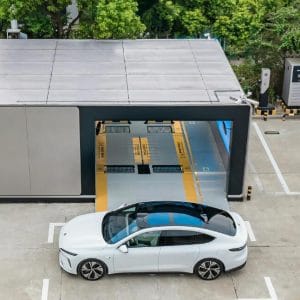
A battery switch container station (also known as a battery swapping station) is a special purpose container designed for rapid electric vehicle (EV) battery replacement. It integrates:
• Battery storage compartments
• Charging systems
• Automated swapping mechanisms
• Hydraulic and electrical control units
The entire process takes only 3 minutes, making it faster than traditional charging. The modular design allows quick deployment and relocation, ideal for logistics hubs, mining sites, and urban transport fleets.
2. Can your battery swap containers be used with different EV models?
Yes. Our battery switch container station is designed to be compatible with multiple EV brands and battery formats. Key features include:
• Adjustable battery cradles
• Universal connection interfaces
• Modular layout that supports various battery sizes
• Integration with fleet management software
This flexibility makes it a scalable solution for commercial EV operators across industries such as delivery, mining, and public transportation.
3. How does the energy storage system container support renewable energy integration?
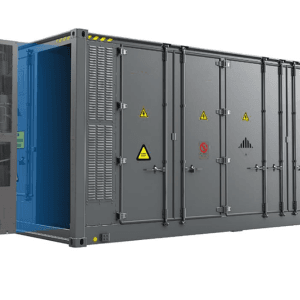
Our Energy Storage System Container (BESS) plays a critical role in modern power grids by:
• Storing excess solar or wind energy during low-demand periods
• Releasing stored energy during peak demand (peak shaving)
• Providing backup power during outages
• Balancing grid frequency and voltage
• Enabling smooth ramp rate control and power smoothing
With advanced lithium-ion and LFP battery technology, our BESS containers improve grid stability, reduce reliance on fossil fuels, and enhance overall energy efficiency.
4. What are the key functions of an Energy Storage System Container?
Our energy storage system container offers 11 advanced functionalities:
1. Ramp Rate Control / Power Smoothing: Reduces fluctuations in power output.
2. Energy Shifting: Stores low-cost energy for high-demand use.
3. Customizable Power Profiles: Set schedules based on load needs.
4. Grid Voltage Control: Maintains stable voltage levels.
5. Power Frequency Response (PFR): Supports consistent frequency.
6. Peak Load Shaving: Reduces strain during peak hours.
7. Reverse Power Protection: Prevents backflow into the grid.
8. Active Power Reserve (APR): Provides emergency support.
9. Enhanced Frequency Response (EFR): Fast response to changes.
10. Frequency Containment Reserve (PRL): Keeps frequency within limits.
11. Plant Level Inertia: Improves system resilience.
These capabilities make it ideal for utilities, industrial plants, and microgrids.
5. Is your energy storage container safe and compliant with international standards?
Yes. Our energy storage system container meets strict safety and regulatory requirements:
• Fire-resistant design with A60-rated insulation
• Built-in thermal management and cooling systems
• Overcharge, over-discharge, and short-circuit protection
• Explosion-proof enclosures and gas detection sensors
• Compliance with IEC, UL, and local grid codes
All units undergo rigorous testing before shipment to ensure reliability and safety in real-world applications.
6. What materials are used in manufacturing special shipping containers?
Our special shipping containers are built using high-performance materials:
• Structural Frame: High-strength steel or aluminum alloy
• Insulation: Polyurethane foam or mineral wool (≥100mm thickness)
• Outer Skin: Pre-painted steel panels (0.5–1.0mm thickness)
• Flooring: Anti-static, anti-slip composite or epoxy-coated steel
• Seals: EPDM gaskets for weatherproofing and dust resistance
For refrigerated or cleanroom containers, we also integrate temperature control systems and HEPA filters.
7. Can you customize a container for my specific equipment or application?
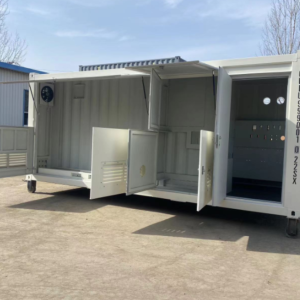
Absolutely. As a customised container factory, we offer full customization services:
• Size and shape tailored to your equipment
• Special doors, hatches, ventilation, and access points
• Internal partitions, cable trays, and mounting brackets
• Integrated HVAC, lighting, and electrical systems
• Waterproofing, soundproofing, or explosion-proof design
Whether you need a mobile lab, data center, or field command unit, we’ll design and build a customised container solution that fits your exact needs.
8. What is the production process for special containers?
Our customised container factory follows a precise manufacturing process:
• Stamping: Steel coils are uncoiled, cleaned, cut, and formed into panels.
• Welding: Components are joined using automated welding robots for precision.
• Painting: Two-layer interior and three-layer exterior coating with UV protection.
• Finishing: Floor installation, sealant application, door seals, vents, and locking mechanisms.
• Testing: Hydraulic pressure tests, leak detection, and functional checks.
Each step ensures durability, performance, and long-term reliability.
9. Are your special containers suitable for harsh environments?
Yes. Our special purpose containers are engineered for extreme conditions:
• High wind resistance (up to 120 km/h)
• Corrosion-resistant coatings for marine or chemical environments
• Temperature tolerance from -40°C to +60°C
• Shock and vibration damping for transport and operation
• Waterproof and dust-tight seals
They are widely used in offshore platforms, deserts, polar regions, and disaster zones.
10. Why choose Beiyu as your customised container solution provider?
Beiyu is a leading customised container factory specializing in special shipping containers and special purpose containers. We provide:
• Full engineering and R&D support
• ISO 9001 certification and 3A-level enterprise credit
• In-house production from raw material to final assembly
• Global delivery and after-sales service
• Customization for energy, defense, medical, mining, and logistics sectors
With thousands of successful projects worldwide, we deliver reliable, innovative, and turnkey customised container solutions tailored to your unique challenges.